

Rio Bravo
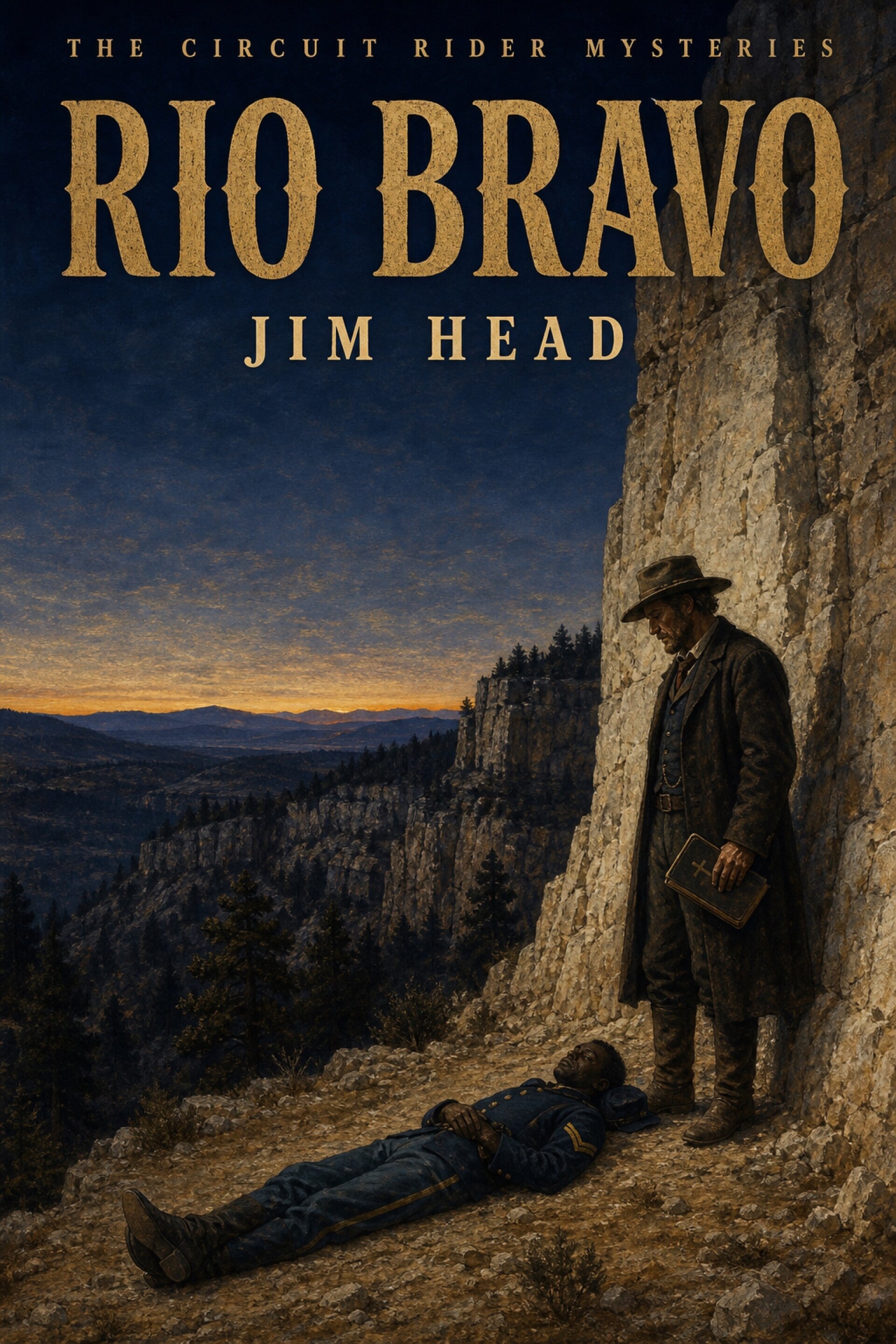
Sergeant Cole spent eight weeks building the case. Then someone pushed him from a bluff. The new circuit minister arrived the same morning — and the fingernails told a different story than the one the post command had already decided on.
Fort Davis, Texas. February 1900. The Ninth Cavalry — the Buffalo Soldiers — have garrisoned this post in the Davis Mountains of the Trans-Pecos for the better part of thirty years. The frontier has been officially closed for nine years. The regiment is preparing to ship for the Philippines. What they are not prepared for is Sergeant Isaiah Cole dead at the base of a bluff above Cienega Creek, the post command already processing the paperwork for an accidental fall.
Reverend Elias Cane arrives at Fort Davis on the same morning, the new circuit minister for the garrison chapel. He is taken to view the body before he has unpacked. He is a former cavalryman — Sixth Ohio Volunteer Cavalry — and he reads ground the way a sergeant reads ground: looking for what doesn't fit. Cole's fingernails are broken off flush, not torn ragged. A man falling from forty feet tears his nails on the rock. A man being pushed holds the surface behind him until his weight carries him over, and the nails break clean.
Cole had been building something. Eight weeks of careful, dangerous work: a debt peonage operation on the Rio Grande border, rancher Emmett Rourke running men from Chihuahua on a debt arrangement designed to be inescapable. Deputy Crawford as the county law — Rourke's man, the channel through which all complaints were made to disappear. And someone inside Fort Davis who had been watching Cole's investigation and passing it along.
The case is undelivered. Cane finds the people Cole trusted: a supply-post owner at the Presidio crossing who has been keeping account for thirteen years. A young Mexican worker with a notebook in his boot — dates, names, amounts, what he heard. A corporal who knows where Cole hid his documentary ledger and has not decided yet whether to trust the new minister. Getting the assembled case from Fort Davis to the federal court in El Paso — around Crawford's channels, past the eyes of whoever inside the post was watching — is the work that remains.
Rio Bravo is the fifteenth book in the Circuit Rider Mysteries — a series of religious historical mysteries set in the American West, following Methodist circuit rider Reverend Elias Cane through the country that is still deciding what it is going to be, and who it is going to be it for. It is a book about the obligation to finish what the dead started, and the specific cost of doing justice in a place where the law has already been purchased.
"He hath showed thee, O man, what is good; and what doth the LORD require of thee, but to do justly, and to love mercy, and to walk humbly with thy God." — Micah 6:8