

The Camas and the Rope
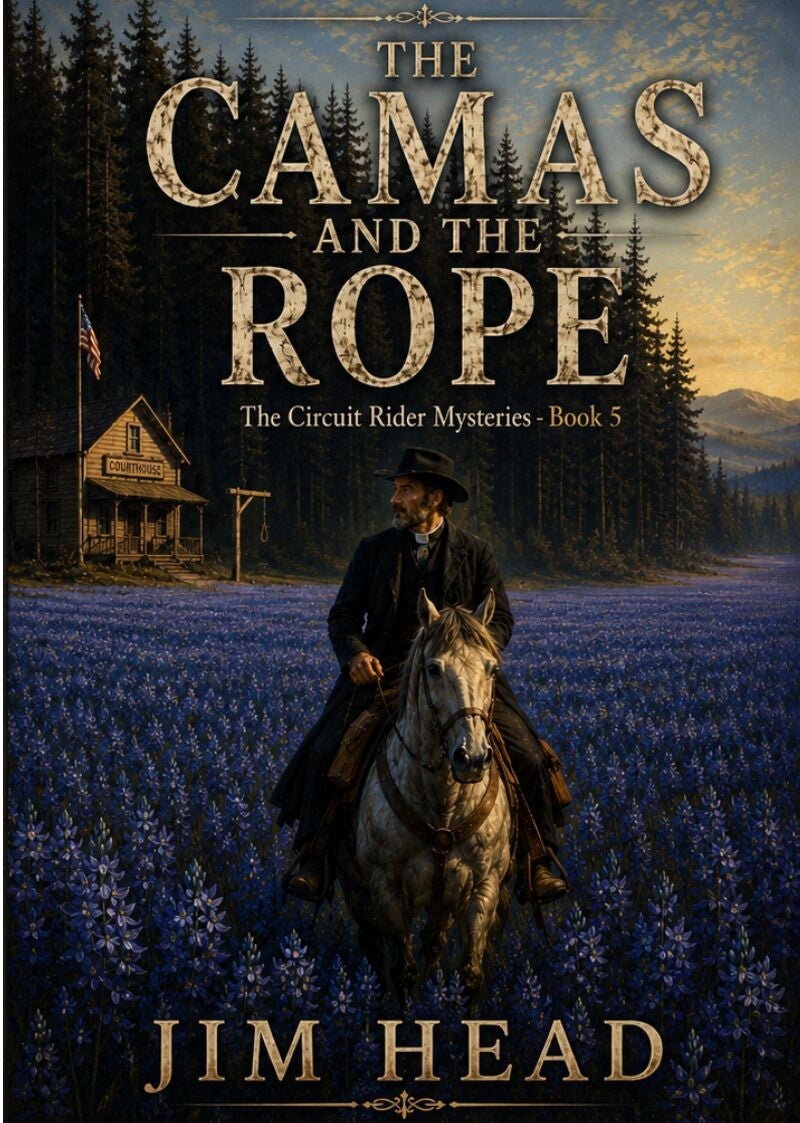
A man was hanged at the first courthouse in Idaho Territory. The rope was legal. The verdict was not.
June, 1889. Reverend Elias Cane rides into Pierce, Idaho — home of the first courthouse ever built in Idaho Territory — and finds a notice nailed to the board outside: a Chinese laundry operator named Liang Jin was hanged three weeks ago for the murder of a company agent. The case is closed. The community has scattered. Only one person is still there.
Mei-Lin, Liang Jin's widow, stayed because she is waiting for someone to find the truth. She tells Cane her husband was home with her the night the man died. She tells him the murder weapon was found behind a locked shed with an uncut lock. She tells him the man he needs to speak to is Robert Ashford — regional manager of the Consolidated Northwest Mining Syndicate, owner of most of the buildings in Pierce, and friend to the marshal and the territorial judge.
Cane rides south to Weippe Prairie, a few miles away, where in May the camas flowers bloom so blue and so vast that Lewis and Clark — descending the Bitterroots half-starved in 1805 — thought they were looking at the ocean. A Nez Perce elder named Thomas Running Elk has been watching Ashford's operation for years. What he knows, and what the murdered company agent discovered before he died, is enough to bring a powerful man down — if anyone will listen long enough to act on it.
What was done to Liang Jin cannot be undone. But the truth can go on the record. And in Pierce, Idaho, in the summer of 1889, that turns out to matter more than anyone expected.
The Camas and the Rope is the fifth book in the Circuit Rider Mysteries — a series of religious historical mysteries set in the 1880s American West, following Reverend Elias Cane, Methodist circuit rider and former Union cavalry sergeant. Set in the historically rich territory of north-central Idaho, it weaves together the gold rush history of Pierce, the Lewis and Clark trail, Nez Perce land rights, and the lives of Chinese immigrants whose stories the official record tried to erase.
Each book in the series stands alone. Together they form a portrait of a man, a faith, and an era.
"You shall not pervert the justice due to your poor in his lawsuit."